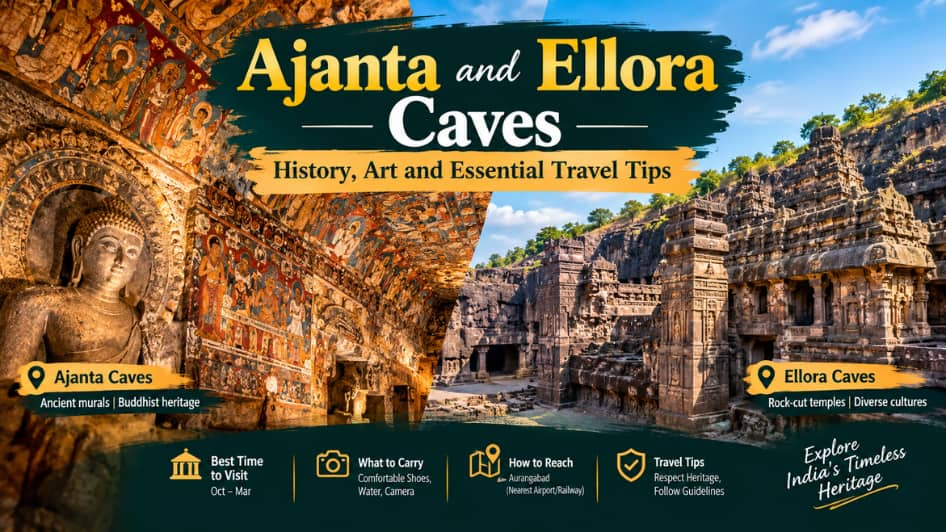
Ajanta and Ellora Caves: History, Art and Essential Travel Tips
The Ajanta and Ellora Caves are famous World Heritage Sites in Maharashtra. These caves are known for their ancient paintings, sculptures, and rock-cut temples. The best time to visit is October to March, when the weather is pleasant for sightseeing and exploring their rich history and art.
The Ajanta and Ellora Caves in Maharashtra offer much more than beautiful views and old stone structures. Ajanta is famous for its wall paintings that show stories from Buddha’s life, while Ellora is known for its huge rock-cut temples, including the famous Kailasa Temple. These caves were made by cutting into solid rock, using the tools and skills available hundreds of years ago. Each site has its own story, art, and design. Therefore, before visiting, it is helpful to learn what makes each cave special, how to reach them, and when to plan your trip.
History of the Ajanta and Ellora Caves
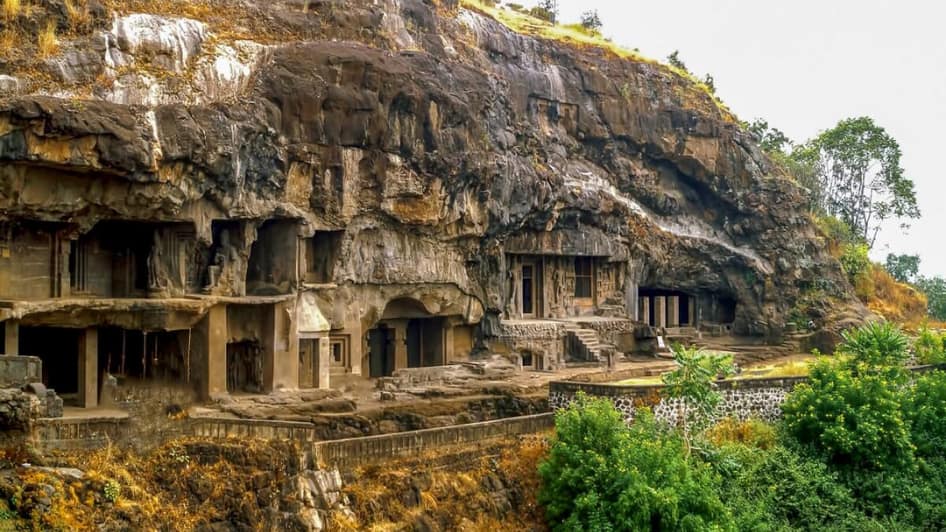
The Ajanta and Ellora Caves are two important historical sites in Maharashtra, India. Both are UNESCO World Heritage Sites, but they are known for different types of art and architecture. The Ajanta Ellora Caves history shows how people in ancient India used their skill to create amazing structures by cutting into solid rock.
1. Ajanta Caves: Ancient Buddhist Art
The Ajanta Caves include 30 rock-cut caves made in two periods, starting from the 2nd century BCE. These caves were used by Buddhist monks for prayer, study, and living. They are famous for paintings that show stories from Buddha’s life and the Jataka tales. The caves remained hidden for many years until a British officer named John Smith came across them in 1819.
2. Ellora Caves: Temples Carved from Rock
The Ellora site has 34 caves created between the 6th and 10th centuries. These caves are special because they are linked to three religions: Buddhism, Hinduism, and Jainism. The most famous attraction is the Kailasa Temple, which was made by cutting into one huge rock. Its large size and beautiful carvings show the amazing skills of artists from ancient times.
Ajanta Caves: A Treasure of Ancient Buddhist Art
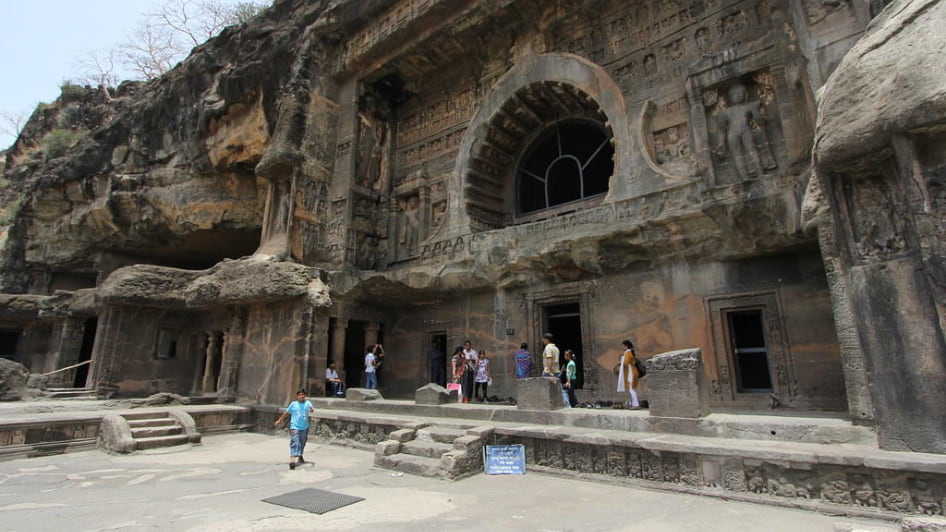
The Ajanta Caves are famous for their ancient paintings and Buddhist art. They offer a glimpse into the life and beliefs of people in ancient India.
1. History and Religious Importance of Ajanta
The Ajanta Caves include 30 rock-cut caves built in two main phases, starting around the 2nd century BCE. Buddhist monks used them for prayers, study, and living. A British officer named John Smith rediscovered these caves in 1819. The Ajanta Ellora Caves history helps visitors understand India’s ancient religious traditions.
2. Famous Paintings and Sculptures at Ajanta
The caves have colourful paintings of Buddha’s life, Jataka tales, and daily life. Cave 1 is famous for the Padmapani painting, while Cave 26 has beautiful Buddha sculptures and carvings. These artworks show the skills of ancient artists. Visitors making plans to visit these caves can check Ajanta Ellora Caves online ticket booking before visiting.
Ellora Caves: Where Three Religions Meet
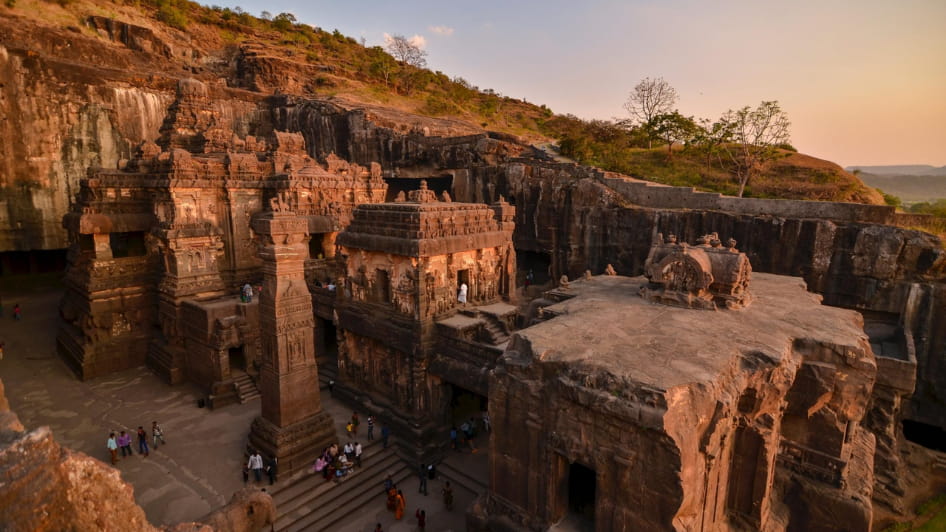
The Ellora Caves are known for their ancient temples, detailed carvings, and religious history. They show how skilled artists created amazing structures from solid rock.
1. History and Religious Importance of Ellora
The Ellora Caves were built between the 6th and 12th centuries. The 34 caves represent three religions: Buddhism, Hinduism, and Jainism. They include places for prayer and temples that reflect the beliefs and art of ancient India.
2. Famous Caves and Architectural Wonders at Ellora
The Kailasa Temple, also called Cave 16, is the main attraction. The Kailasa Temple was carved from one huge rock. Buddhist Cave 10, also called the Vishvakarma Cave, is famous for its large prayer hall. The cave also features beautiful pillars, statues, and detailed carvings. However, if you are making plans to visit, check Ellora Caves timing and ticket price before visiting.
Ajanta vs. Ellora Caves: What Is the Difference?
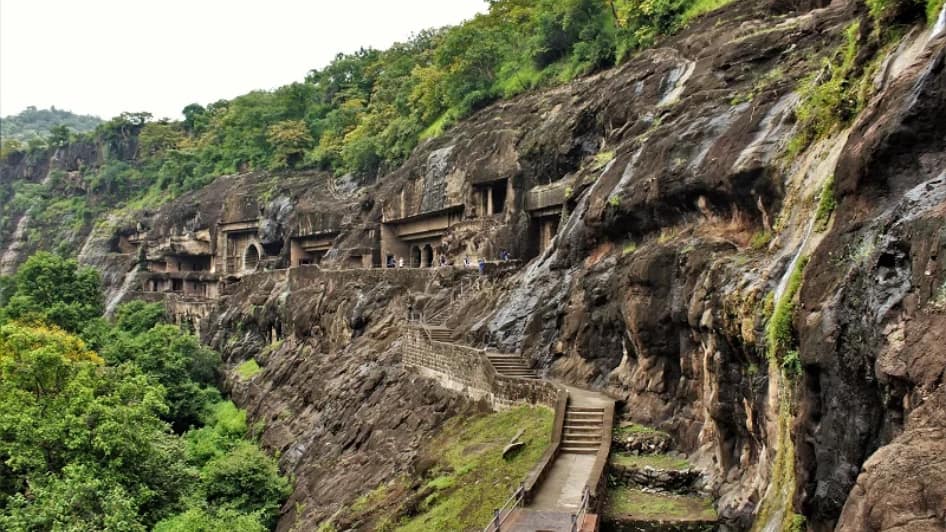
The Ajanta and Ellora Caves are famous for their ancient art, but each site offers a different experience. Here are the main differences between them.
| Feature | Ajanta Caves | Ellora Caves |
|---|---|---|
| Religion | Mainly linked to Buddhism. | Buddhism, Hinduism, and Jainism. |
| Main Attraction | Colourful wall paintings and Buddhist sculptures. | Rock-cut temples, large statues, and detailed carvings. |
| Historical Period | From the 2nd century BCE to around the 6th century CE. | Mainly from the 6th to 10th centuries CE. |
| Number of Caves | 30 caves. | 34 caves. |
| Famous Attraction | Cave 1, known for the Padmapani painting. | Cave 16, home to the famous Kailasa Temple. |
| Original Use | Buddhist monasteries and prayer halls. | Monasteries, prayer halls, and religious sites. |
| Location | Near the Waghora River in Maharashtra. | Near Chhatrapati Sambhajinagar, Maharashtra. |
| Best For | Visitors interested in ancient paintings and Buddhist stories. | Visitors interested in temple design, stone carvings, and different religions. |
Best Time to Visit Ajanta and Ellora Caves
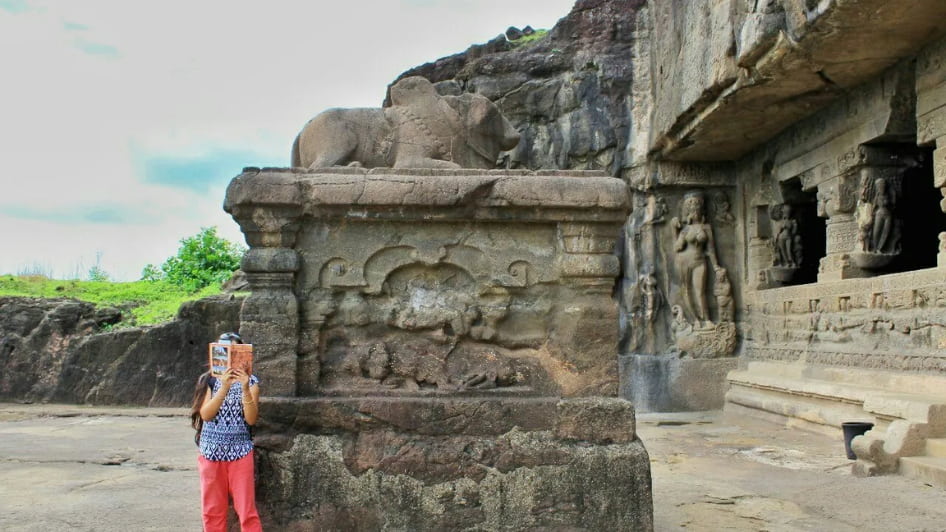
The best time to visit the Ajanta and Ellora Caves is from October to March, when the weather is pleasant for walking and exploring. The monsoon season brings green hills, but rain may affect travel plans.
| Season | What to Expect | Travel Tip |
|---|---|---|
| October to March | Pleasant weather for sightseeing. | Best time to explore both sites. |
| June to September | Green hills and rainy weather. | Check road and weather conditions. |
| April to May | Hot weather and strong sunlight. | Start early and carry water. |
Note: Check the latest Ellora Caves timings and Ajanta Caves opening details before planning your trip, as weekly closures and visiting hours may differ.
Essential Travel Tips for Visiting Ajanta and Ellora Caves
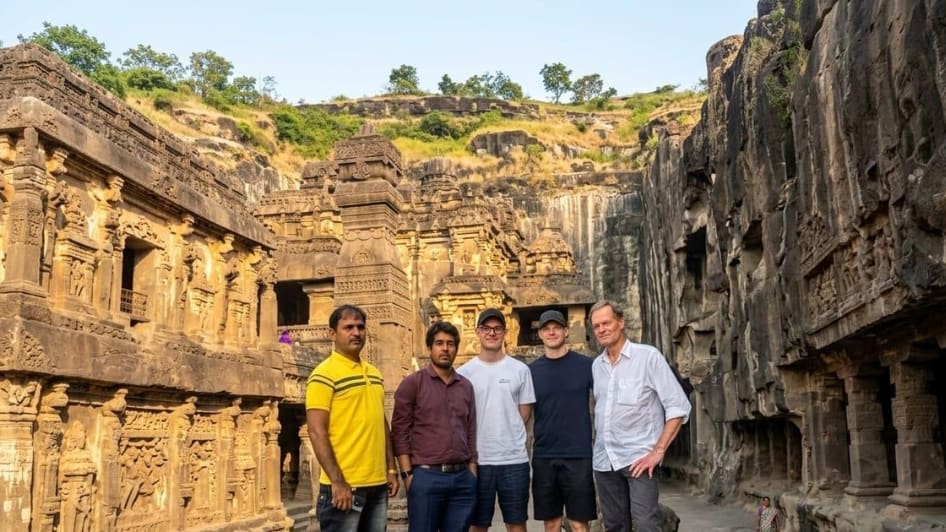
A little planning can make your visit easier and more comfortable. Remember these simple tips before you visit.
- Plan Your Itinerary in Advance: Plan two days to visit both sites without rushing. Ajanta is farther from Chhatrapati Sambhajinagar than Ellora, so check travel times before planning your trip. An Ajanta and Ellora Caves complete guide can help you prepare.
- Wear Comfortable Clothing and Shoes: Wear comfortable shoes because some paths are rough and have steps. Carry water, sunscreen, and a hat to stay comfortable while exploring.
- Respect the Heritage Sites: Follow photography rules, avoid touching paintings and sculptures, and do not leave rubbish behind. This helps protect the caves for future visitors.
- Hire a Licensed Guide: Hire a licensed travel guide to deeply understand the stories of these caves.
- Check Tickets and Local Transport: Check Ajanta Caves tickets and entry fees through official sources before travelling. Arrange local transport in advance and check site rules to avoid last-minute problems.
How to Reach Ajanta and Ellora Caves
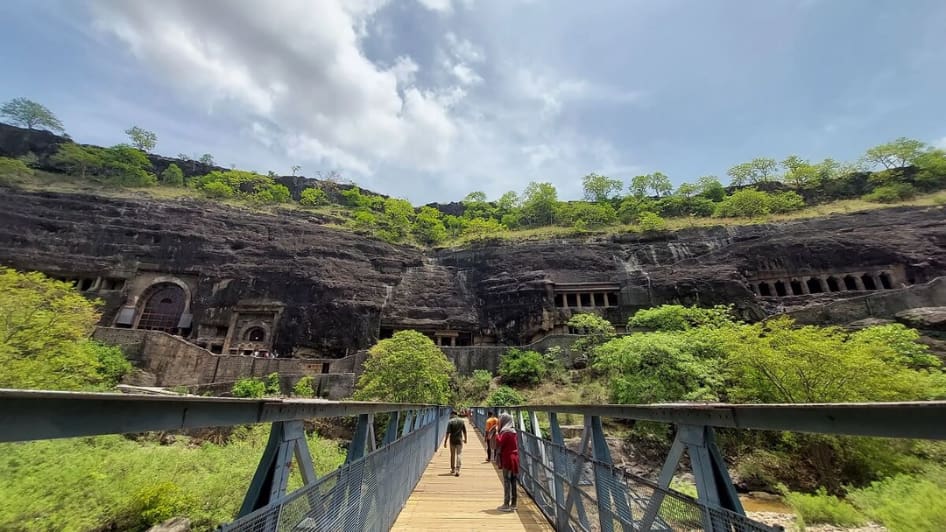
Think of your trip as two different journeys into the past. One takes you to ancient paintings hidden among rocky hills, while the other leads to temples carved from huge rocks. Here is how you can reach both places.
- By Air: Fly to Chhatrapati Sambhajinagar Airport and check available flights before booking. You can hire a taxi from the airport for the next part of your journey.
- By Train: Chhatrapati Sambhajinagar railway station is a useful arrival point. Taxis and other local transport options are available for travelling to the caves.
- By Road: You can travel by taxi, private car, or local transport. Ajanta and Ellora lie in different directions from the city, so plan separate trips to explore both sites comfortably.
Where to Stay When Visiting Ajanta and Ellora Caves
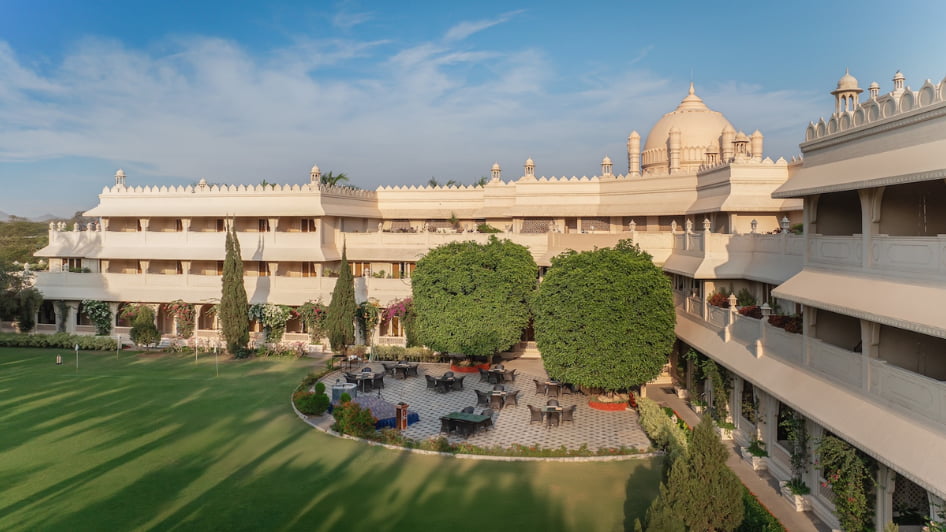
Chhatrapati Sambhajinagar (formerly Aurangabad) is a convenient base for visiting both sites, with many hotels, restaurants, and transport options.
- Chhatrapati Sambhajinagar: Best for a wider choice of hotels, including Gateway Aurangabad, Welcomhotel Rama International, and IRA by Orchid.
- Near Ellora Caves: Hotels such as Hotel Kailas and Ellora Heritage Resort are suitable for visitors who want to stay closer to Ellora.
- Near Ajanta Caves: Stays around Fardapur are worth considering if you want to reduce travel time to Ajanta.
Conclusion
A visit to the Ajanta and Ellora Caves is a chance to see India’s rich history, beautiful paintings, and amazing rock-cut temples. To make your trip easier, you can reach out to Noble House Tours Pvt. Ltd. We offer comfortable accommodation, budget-friendly packages, tourist guides, full travel support, and help travellers plan their trips. Whether you are travelling with family, friends, or on your own, we help you choose suitable travel options based on your needs and budget
