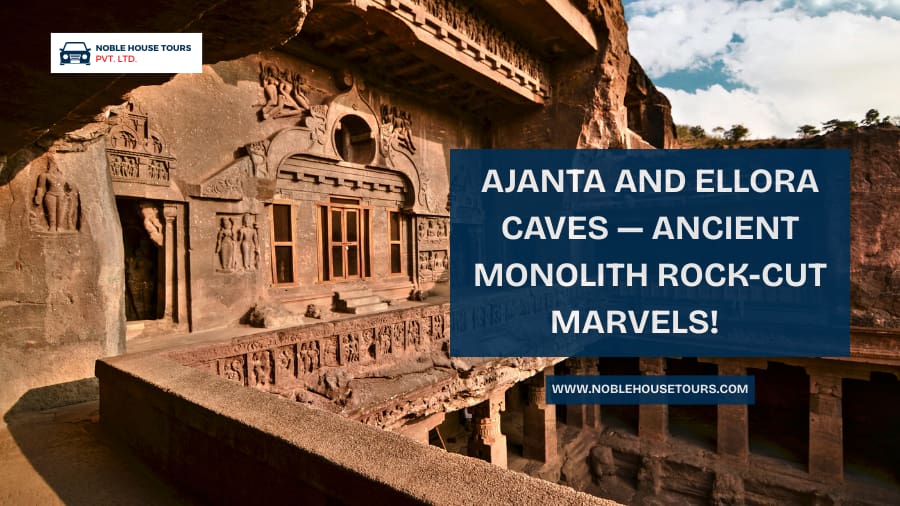
Ajanta and Ellora Caves — Ancient Monolith Rock-cut Marvels!
The Ajanta and Ellora Caves in Maharashtra, India, are a must-see for tourists who enjoy history, art, and culture. A living example of India’s remarkable artistic and architectural legacy, these ancient rock-cut cave complexes are more than just a group of caves. Seeing the tales of a civilization etched into stone here is like traveling back in time.
This guide will walk you through the enchanted journey of the Ellora and Ajanta Caves, describing their history, what makes them unique, and how to organize the ideal vacation. The ideal time to visit and how a travel company like Noble House Tours Pvt. Ltd. can ensure a flawless experience will also be discussed.
A Glimpse into the Past – Ajanta Ellora Caves History
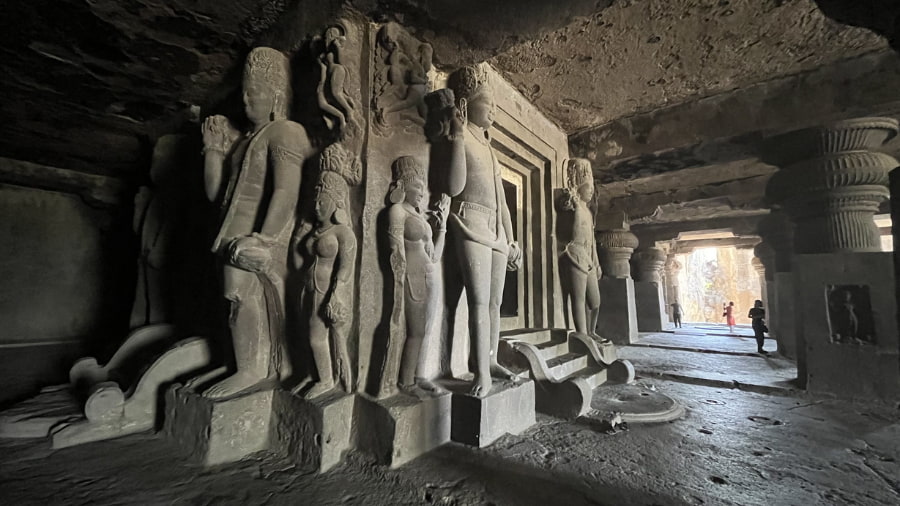
You must comprehend the history of these wonders in order to fully appreciate them. Although the Ajanta and Ellora Caves are two distinct locations, roughly 100 kilometers apart, they are frequently visited together.
A. The Ajanta Caves – A Buddhist Treasure Trove
The Ajanta Caves are a group of roughly thirty Buddhist cave monuments carved out of rock. From the second century BC to the sixth century AD, they were constructed in two stages. Buddhist monks used these caves as prayer halls and monasteries.
The magnificent paintings found in the Ajanta Caves are their most well-known feature. The Jataka Tales, which tell of the Buddha’s past incarnations, are portrayed in these frescoes, or murals. They are renowned for their rich details, vivid colors, and ability to depict ancient Indian life and human emotions. Because of their exceptional preservation, the paintings appear to have been created only a few centuries ago rather than thousands of years ago.
Who built Ajanta and Ellora caves? During the Vakataka dynasty in particular, the Ajanta Caves were visited by a number of affluent merchants and rulers. They were constructed to give Buddhist monks a place of worship and shelter during the monsoon season. A British officer named John Smith, who was hunting tigers, rediscovered them in 1819 after a protracted period of abandonment.
B. The Ellora Caves – A Symphony of Three Religions
Because the Ellora Caves symbolize three distinct religions—Buddhism, Hinduism, and Jainism—they are a genuinely unique location. Between the sixth and tenth centuries AD, 34 caves were carved. The remarkable religious harmony that existed in ancient India is demonstrated by this assortment of religious monuments that are all situated close to one another.
The Kailasa Temple (Cave 16) is the most striking feature of the Ellora Caves. This enormous monolithic structure was chiselled out of a single rock. Dedicated to Lord Shiva, it is a magnificent example of Hindu rock-cut architecture. Its size, level of detail, and sheer artistic ability are astounding. It is among the world’s most well-known rock-cut constructions.
The oldest are thought to be the Buddhist caves at Ellora (Caves 1–12). Subsequently constructed, the Hindu caves (Caves 13–29) demonstrate a shift toward more ornate designs. The final caves are the Jain caves (Caves 30-34), which are renowned for their fine art and elaborate carvings.
The Crown Jewel of Ellora – Kailasa Temple
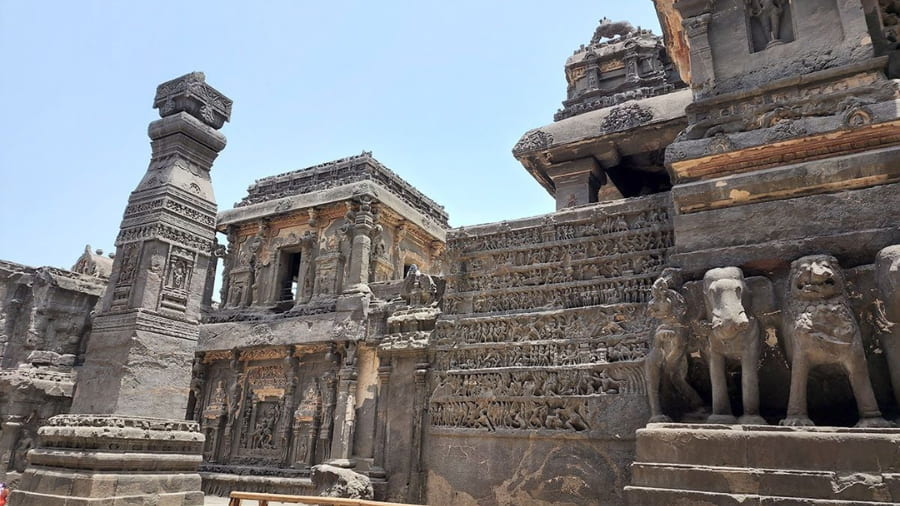
1. A Monument to Art and Engineering – The most well-known feature of the Ellora Caves is the Kailasa Temple. A UNESCO World Heritage Site, this temple is a magnificent example of rock-cut architecture and a testament to the artistic brilliance and tenacity of people.
2. The Top-Down Creation – This temple was carved out of a single, enormous basalt rock from the top down, in contrast to conventional structures. In order to uncover the temple, its pillars, and its statues, artisans started at the top of a cliff and worked their way down, removing an estimated 200,000 tonnes of rock.
3. A Representation of Mount Kailash – The Rashtrakuta kings constructed the temple to symbolize Mount Kailash, the fabled residence of Lord Shiva in the Himalayas. The temple is devoted to him and is a work of architectural art that was done flawlessly.
4. Exquisite Sculptures and Carvings – The temple is embellished with a large number of carved panels that show scenes from Hindu epics such as the Mahabharata and the Ramayana. Another important feature is the magnificent panels that show Lord Vishnu’s various avatars and the enormous monolithic pillars in the courtyard.
Planning Your Trip – Essential Information

Making the right plans for your trip to the Ajanta and Ellora Caves is essential for the greatest experience.
A. Best Time to Visit
The cooler months are the Best time to visit Ajanta Caves.
1. Winter (October to March) – The best time of year is during the winter (October to March). Without the extreme heat, the weather is pleasant and ideal for exploring the caves.
2. Monsoon (June to September) – The area surrounding the caves is verdant and lush, with cascading waterfalls, creating a picturesque and lovely scene. Although a little humid, the weather is tolerable.
3. Summer (April to May) – Temperatures soar, and it gets very hot. It can be very difficult to visit during this time.
B. Timings and Tickets
1. Ajanta Ellora Caves Timings –
- Ajanta Caves – The hours of operation for Ajanta Caves are 9:00 AM to 5:00 PM. On Mondays, they are closed.
- Ellora Caves Timings – The hours of Ellora Caves are 6:00 AM to 6:00 PM. On Tuesdays, they are closed.
- Ticket Cost – Both sets of caves have a small admission charge. Foreign nationals and Indian citizens have different access to it. Generally, admission is free for children under a specific age.
2. Travel and Logistics
Aurangabad, which is now known as Chhatrapati Sambhaji Nagar, is the closest major city to the caves. You can then take a bus or rent a car to get to the caves. Ellora is only a 45- to 1-hour drive from Aurangabad, whereas Ajanta takes about two hours. Since it takes several hours to thoroughly explore each site, it is best to allow at least two days to see both in comfort.
The Ease of a Tour Package

Even though you can arrange your own travel, choosing to take an Ajanta Ellora Caves tour package cost can make the trip less stressful and more pleasurable. A typical tour package consists of –
- Lodging in a reputable hotel.
- Transportation using a driver and a private vehicle.
- A qualified guide who can narrate the caves’ stories and history.
- Tickets for entry and other preparations.
The length of the trip, the hotel level, and whether you select a private or group tour can all have a significant impact on the Ajanta Ellora Caves tour package price. A budget tour package can cost as little as a few thousand rupees per person, while luxury options can cost more.
Why Choose Noble House Tours Pvt. Ltd.?

A trustworthy and knowledgeable travel agency is essential for a genuinely unforgettable trip. One well-known travel company that specializes in designing customized itineraries throughout India is Noble House Tours Pvt. Ltd. They can create a tour package to match your spending limit and particular requirements.
Here’s why they’re a fantastic option –
1. Expert Knowledge – They can offer informed guides who vividly depict the history of the caves because they have a thorough understanding of the area.
2. Customized Itineraries – They can design the ideal itinerary for you, whether you’re looking for a quick 2-day getaway or a more in-depth 4-day tour that includes neighboring sites like the Daulatabad Fort and Bibi Ka Maqbara.
3. Experience Without Hassle – They take care of all the arrangements, including hotel reservations, transportation, and airport transfers, so you can concentrate on taking in the wonders of the caves.
A journey through time, visiting the Ajanta and Ellora Caves is more than just a trip. The skill and commitment of the craftspeople who made these ancient monolithic rock-cut wonders are evident. An unforgettable trip to these UNESCO World Heritage Sites can be achieved with careful planning and a little assistance from a seasoned travel company like Noble House Tours Pvt. Ltd.
