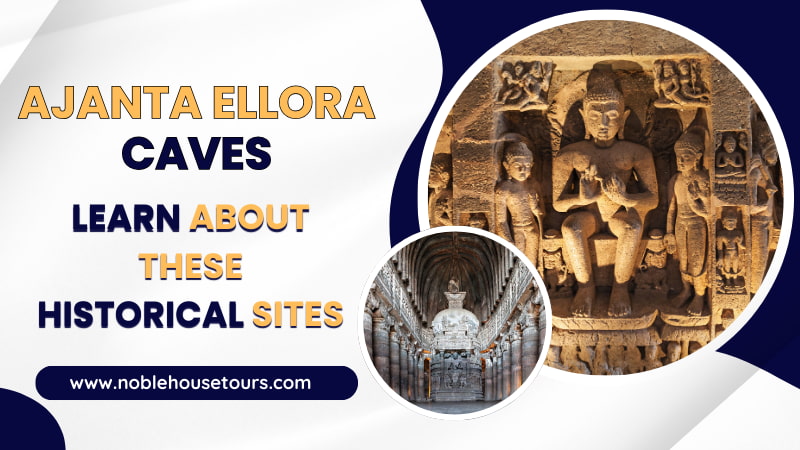
Ajanta Ellora Caves: Learn About These Historical Sites
The Ajanta Ellora caves are frequently discussed as the architectural marvels of ancient Indian engineering. Deeply rooted in spirituality and philosophy, they showcase an intriguing part of our history. Also, recognised as the UNESCO World Heritage Sites, both are artistically and architecturally rich and feature intricate sculptures and paintings from the Hindu, Jain, and Buddhist schools of thought, exhibiting religious tolerance and cultural diversity.
Located in the Aurangabad district of Maharashtra, these caves are not just a major tourist attraction, but a significant archeological site for scientists and researchers. In this blog, we have shed light on the historical, religious and architectural significance of Ajanta Ellora caves, key differences, and Ajanta Ellora Caves timings and entry fee for tourists.
Ajanta Caves: A Historical Overview

The Ajanta Caves are 29 Buddhist caves carved in a horseshoe-shaped face overlooking the Waghora River. Featuring exquisite and expressive murals of Buddhist culture, its design showcases the master art of the fresco-secco technique.
The monasteries (virahas) of this Buddhist architecture served as the meditation centres for the monks, and the prayer halls (chityas) were built to depict Buddha’s life and Jataka Tales. The caves are a sophisticated work of art and were built between the 2nd Century BCE and the 6th Century AD by the Satvahana and Vakataka rulers.
It was built in 2 phases, containing the Hinayana phase and the Mahayana phase. The Hinayana phase contains caves 9, 10, which are mainly focused on the stupas. Another Mahayana phase features caves 1, 2, 16, and 17, focusing on intricate decorations and Buddha’s images.
Ellora Caves: A Historical Overview

Ellora Caves are an intricate architectural site of India. It consists of 34 caves featuring Buddhist, Hindu, and the Jain schools of thought. It was constructed by cutting down a massive boulder between the 6th and 11th centuries AD.
Built by Rashtrakutas, Chalukyas, and Yadavas, Ellora caves feature temples, Buddhist viharas and chaityas, Hindu sculptures featuring deities and Jain Shrines. The main centre of architectural marvel is the Kailasa Temple of Cave 16, which is built in the shape of a chariot and is devoted to Lord Shiva. In addition, the Kailasa Temple is considered the world’s largest monolithic structure.
At its core, Ajanta Ellora history is an embodiment of religious tolerance, harmony and the unity of the three entirely distinct philosophies.
Significance of Ajanta Caves

The Ajanta Caves display the architectural mastery of ancient India. Its artistic and sophisticated design explores its significance.
- Ajanta Caves are a 300 years old cave architecture.
- It is renowned for its stunning and rock-cut well-preserved virahas and chaityas.
- Ajanta caves demonstrate the peak architectural achievement of Guptas.
- These caves have artistically presented Buddha’s teachings, sermons, and significance of self-reflection for the self.
- You can see peculiar yet alluring sculptures of Buddha, in both animal and human form.
- It was built in 2 divisions, one features caves from 1 to 10 and another sections contains 11 to 29.
- Another property of these caves is that they tell us about the previous incarnations or past births of Buddha’s and his mahaparinirvana of this life.
Significance of Ellora Caves

Ellora Caves are a true example of religious harmony. Featuring the historical significance of Buddhist, Jain and Hindu culture, they contain various major architectural marvels.
- Ellora Caves are an architecturally rich and vivid symbol of the religious tolerance of ancient India.
- It features sculptures of Buddha, the Hindu deity Shiva and the Tirthankaras of Jainism.
- These caves are a testament to the master skills of architecture and design.
- The Buddhist designs and imagery show the influence of the Chlukya dynasty.
- The most famous Kailasa Temple in cave 16 was built by the Kalachuri dynasty.
- The Ellora caves feature decorated narrative paintings, visual storytelling, mystical and mythological stories, and other significant historical events of Indian culture.
- The coexistence of three cultures contains 12 Buddhist caves, 17 caves related to Hinduism, and 5 Jain caves.
Difference Between the Ajanta and Ellora Caves

While they display the philosophical ideologies and beliefs of Buddhism, Hinduism and Jainism, Ajanta Ellora Caves share significant differences in time periods, symmetrical designs and other features. Here are five of the major differences:
First Difference

- The Ajanta Caves are specifically designed for Buddhism.
- Ellora Caves, on the other side, features three major philosophies: Buddhism, Hinduism, and Jainism.
Second Difference

- Another major difference between Ajanta and Ellora caves is that the Ajanta caves feature Buddhist murals or frescoes depicting Buddha’s life and Jataka Tales.
- However, the Ajanta Ellora caves paintings consist of temples, intricate designs and sculptures from all three philosophies.
Third Difference

- Ajanta consist of 29 caves
- Ellora features 34 distinct caves
Fourth Difference

- The Ajanta caves are situated in the Aurangabad district of Maharashtra.
- Ellora Caves are located 30 km from Chhatrapati Sambhajinagar (Aurangabad)
Fifth Difference

- The Ajanta Caves were built between the 2nd Century BC and the 6th Century AD.
- Ellora Caves date back to the 6th Century AD and the 10th Century AD.
Ticket Price of Ajanta and Ellora Caves

The mode of ticket booking and range of Ajanta Ellora Caves tickets cost are different for Indian tourists and foreign travellers. Here is a short breakdown:
Ajanta Ellora caves ticket price:
Indians, and citizens of SAARC and BIMSTEC countries: INR 40 (offline booking)
For online ticket booking: INR 35
Foreign Travellers from other nations: INR 600 (offline booking)
Online tickets: INR 550
Additional Fee: INR 25 for cameras and photography
Also, the children who are residents of India and below 15 years of age do not require a ticket.
Ajanta and Ellora Caves online ticket booking price is cheaper than the offline mode; therefore, choose the method that is convenient to you.
Timings of Ajanta Ellora Caves

Ajanta Ellora Caves timings differ a bit for tourism. Here’s an overview:
Ajanta Caves Timings:
Opens From: 9 AM to 5 PM
The Ajanta Caves are Closed on Mondays
Ellora Caves Timings:
Opens from 6 AM to 6 PM
They are Closed on Tuesdays
Conclusion
The Ajanta Ellora Caves were designated as UNESCO World Heritage Sites in 1983. Due to their architectural brilliance and chiselled stone detailing, they are a living testimony of ancient Indian craftsmanship brilliance, cultural and philosophical antiquity. Here we discussed a short abstract of Ajanta Ellora caves, including their history, significance, architectural properties, five major distinctions and an overview of ticket price and Ellora Caves timings and entry fee, as they are major tourism sites.
Noble House Tours is a trusted and leading travel and tourism operator in India. With extensive experience of 28 years in the tourism industry, we specialise in offering comprehensive travel services to our clients. With our personalised packages, you can navigate your journeys with convenience and safety. From the best accommodations, conveyance to booking Ajanta Ellora Caves tickets, you can count on our professional and reliable support. Therefore, you can reach out and make your Ajanta Ellora Caves expedition unforgettable.
