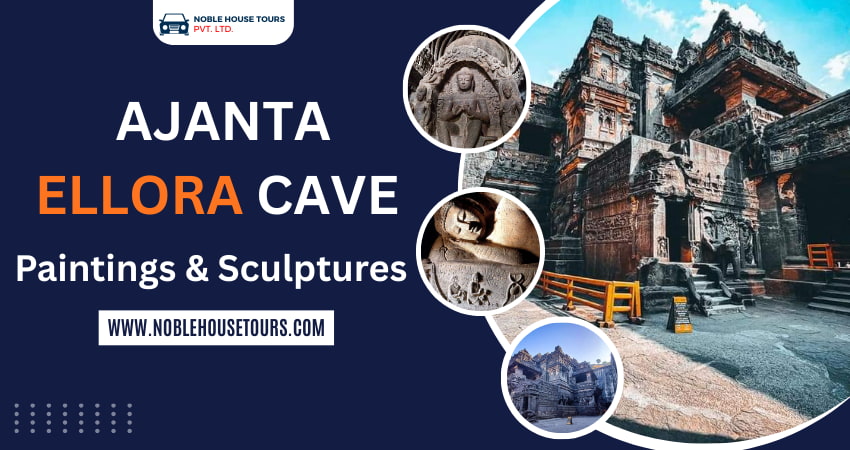
Ajanta Ellora Cave Paintings & Sculptures
Ajanta Ellora Cave are two major UNESCO World Heritage Sites of India. They are the epitome of the ancient rich architectural mastery of the country. Both are rock-cut cave complexes featuring paintings, sculptures, and temples from three major religions of India, Buddhism, Hinduism, and Jainism. Exhibiting a living example of religious harmony and cultural diversity, they are a testament to Indian art and cultural history.
Therefore, in this blog, we discuss the history of Ajanta Ellora cave painting and sculptures, exploring their religious significance, key artistic components, and the best time to visit Ajanta Caves and Ellora Caves, as they are a major tourist spot as well.
History of Ajanta Ellora Cave Painting and Sculptures

During ancient times, India used to be culturally proactive. There were dynasties like the Satavahana Dynasty, Vakataka Dynasty, and especially the Gupta Empire, at their peak are credited for the origins and developments of Ajanta caves, paintings, and sculptures.
- Ajanta Caves date back to two periods of time, one is 2nd to 1st Century BCE, and the second is 4th to 6th Century CE.
- The development was done in two phases in the form of Virahas and Chaityas.
- It features 30 caves. Ajanta has several paintings and sculptures related to Buddhism, especially Gautama Buddha, his teachings, and his life.
About Ellora Caves, their history dates back to the period of 4 major contributors from the 6th to 10th CE. Beginning in the 6th Century CE, the construction was followed by major developments, including the Cave 16, which features the majestic Kailasa Temple dedicated to Lord Shiva.
- The construction of Ellora Caves was initiated by the Kalachuri Dynasty between the 6th to 7 centuries CE.
- The Chalukyas of Badami then contributed to the construction of some significant parts of the caves.
- King Krishna I from the Rashtrakuta Dynasty continued building major parts of the caves, including Kailasa Temple, Hindu sculptures, epic paintings, and other Buddhist caves.
- The last construction happened in the 12th to 13th Century CE, by the Yadava Dynasty, which led to the integration of Jain sculptures and paintings.
Key Painting and Sculptures of Ajanta Ellora Caves

Ultimately, both Ajanta and Ellora Caves document around 1.5 to 2.2 thousand years of the sophisticated artistic history of India. In the forms of rock-cut temples, paintings, and sculptures, they present India as a spiritual and architectural genius of that time. Here is an overview of the Ellora and Ajanta Caves paintings and sculptures:
Ajanta Caves Paintings and Sculptures

1. Bodhisattva Padmapani

- Bodhisattva Padmapani, or the Lotus Bearer, is a significant painting of Ajanta Cave 1.
- It shows Gautama Buddha’s iconography with jewels, a crown, and a lotus flower in his right hand.
- The lotus symbolises purity, and mind, and enlightenment.
- The painting is a 3-dimensional masterpiece showcasing Buddha in his distinctive form.
2. Janaka the King and his Wife

- The Janaka the King and his Wife is located in Ajanta Cave 1.
- A distinctive painting of King Janaka, where he tells his wife about leaving worldly pleasures.
- This attitude of his symbolises detachment from the world.
- His wife is shown dancing, trying to persuade him not to chase spiritual awakening.
3. Persian Ambassador’s Painting

- Another painting in Ajanta Cave 1.
- Depicts Persian elites in Sasanian dress.
- It represents the trade and relations of India.
4. The Reclining Buddha

- The Reclining Buddha is a majestic sculpture of Gautama Buddha from Cave 26.
- The sculpture shows Buddha lying down on his ride hand, on the right side.
- It represents his final moments before Maha Parinirvana.
- Below the sculpture, on the wall, you can see his disciples with different gestures and meditation postures.
Paintings and Sculptures of Ellora Caves

1. Kailasa Temple

- A prominent temple of the Ellora Caves of Cave 16.
- Kailasa temple is dedicated to Lord Shiva.
- It was built by Rashtrakuta King Krishna I in the 8th Century CE.
- The temple was built by cutting a boulder composed of a volcanic rock, Basalt from Charanandri Hills.
2. Sculpture of Nataraja

- Sculpture of Nataraja in Cave 26.
- Depicts Shiva as the cosmic dancer and destroyer of the universe.
- He is performing Tandava (the dance of destruction).
- A beautiful symbolism of new life from the previous one.
3. Parshvanatha with Serpent Hood

- Located in the Jain Cave 30.
- It depicts a major Jain Tirthankar, Parshvanatha, with serpent king Dharanendra.
- Dharanendra is depicted as a shield who is protecting Tirthankar from the demon Kamatha.
4. Goddess Tara Sculpture

- Tara Sculpture is prominently featured in Cave 6 and 12.
- Goddess Tara is shown in her meditative and compassionate form.
- She is a major female deity of Tibet, Nepal, and the Shaivism tradition.
- Her sculpture shows a deeply rooted connection with Hindu and Buddhist traditions.
The Best Time to Visit Ajanta Ellora Caves

Ajanta Ellora Caves are situated in Chhatrapati Sambhaji Nagar (Aurangabad), Maharashtra. To get a comfortable Ajanta Ellora cave paintings & sculptures tour, it is necessary that you know the best seasons to visit the caves. Here is a breakdown of the seasons:
October to March: There is no best time to visit Ajanta Ellora Caves than during the winter season. The weather is cool, pleasant, and free from egg-frying temperatures.
June to September: If you do not prefer the winter season, then consider visiting during the monsoon. In this season, the landscape turns lush green and adds peace to the overall experience.
April to June: Not the best time to visit Ajanta Caves and Ellora Caves. The summer season in India is not suitable for outdoor tourist activities. Therefore, not recommended.
Conclusion
Ajanta Ellora Caves history dates back thousands of years. Their sophisticated artwork of paintings and sculptures showcases the architectural brilliance of India. In addition, their exploration offers a distinct to the core principles and philosophies of ancient India. Therefore, we walked through the history of Ajanta Ellora Caves paintings and sculptures, explored them in detail, and discussed the best time to visit Ajanta Ellora Caves if you are planning a historic visit.
Noble House Tours Pvt. Ltd. is a reputed tour operator in India. As a reliable travel agency with extensive experience, we offer personalised Ajanta Ellora Caves tour packages to domestic and international backpackers. Our comprehensive services include travel and conveyance, competitive and transparent pricing, and the best accommodation options. Therefore, we make sure that your journey is safe and convenient, and we look forward to hearing from you to plan your journey.
